

A teaspoon does not always hold the same amount of tea. We show you how to measure by weight and adapt the proportions for a cup or a teapot.
More-
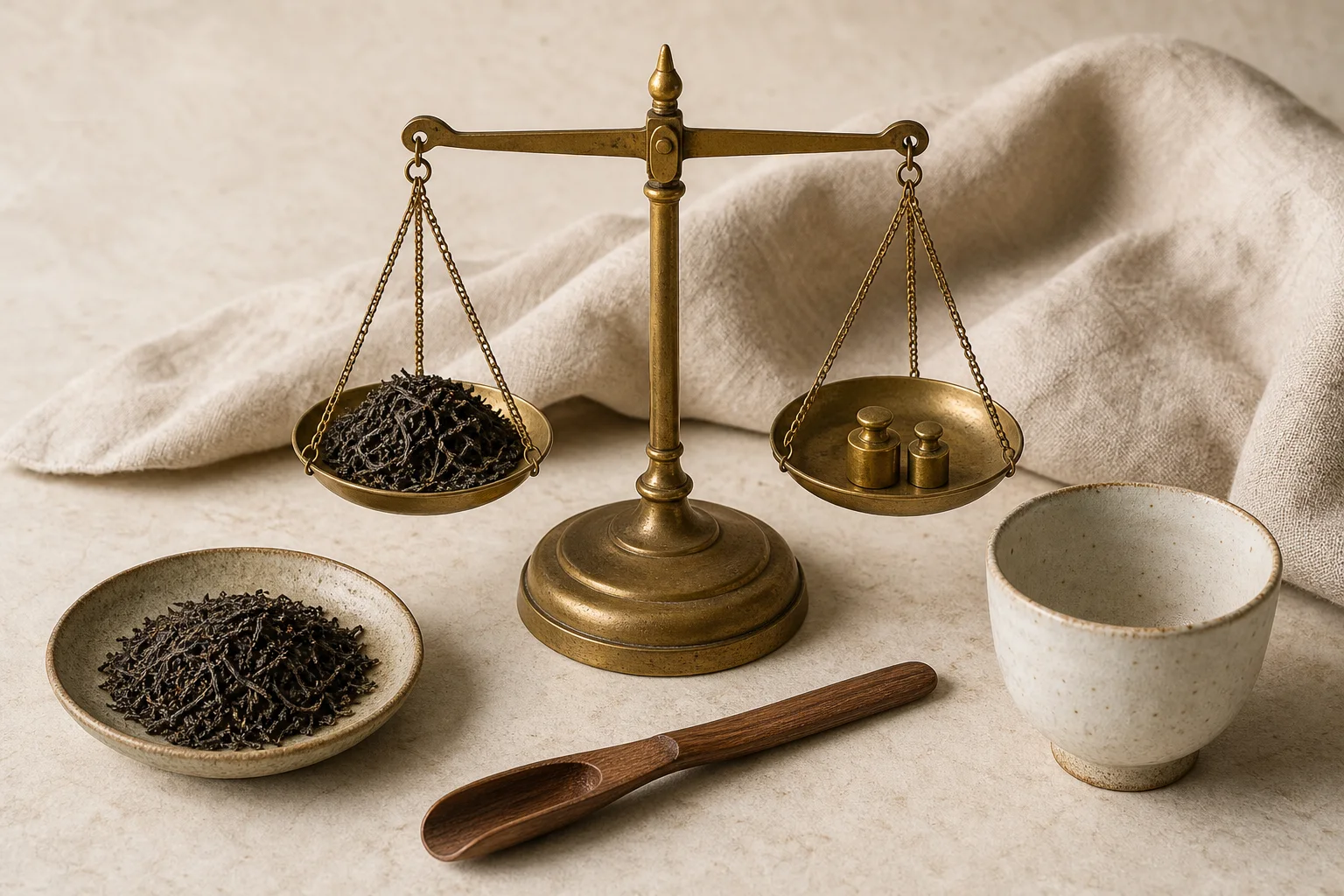
How Much Tea per Cup? Proportions Without Guesswork
-
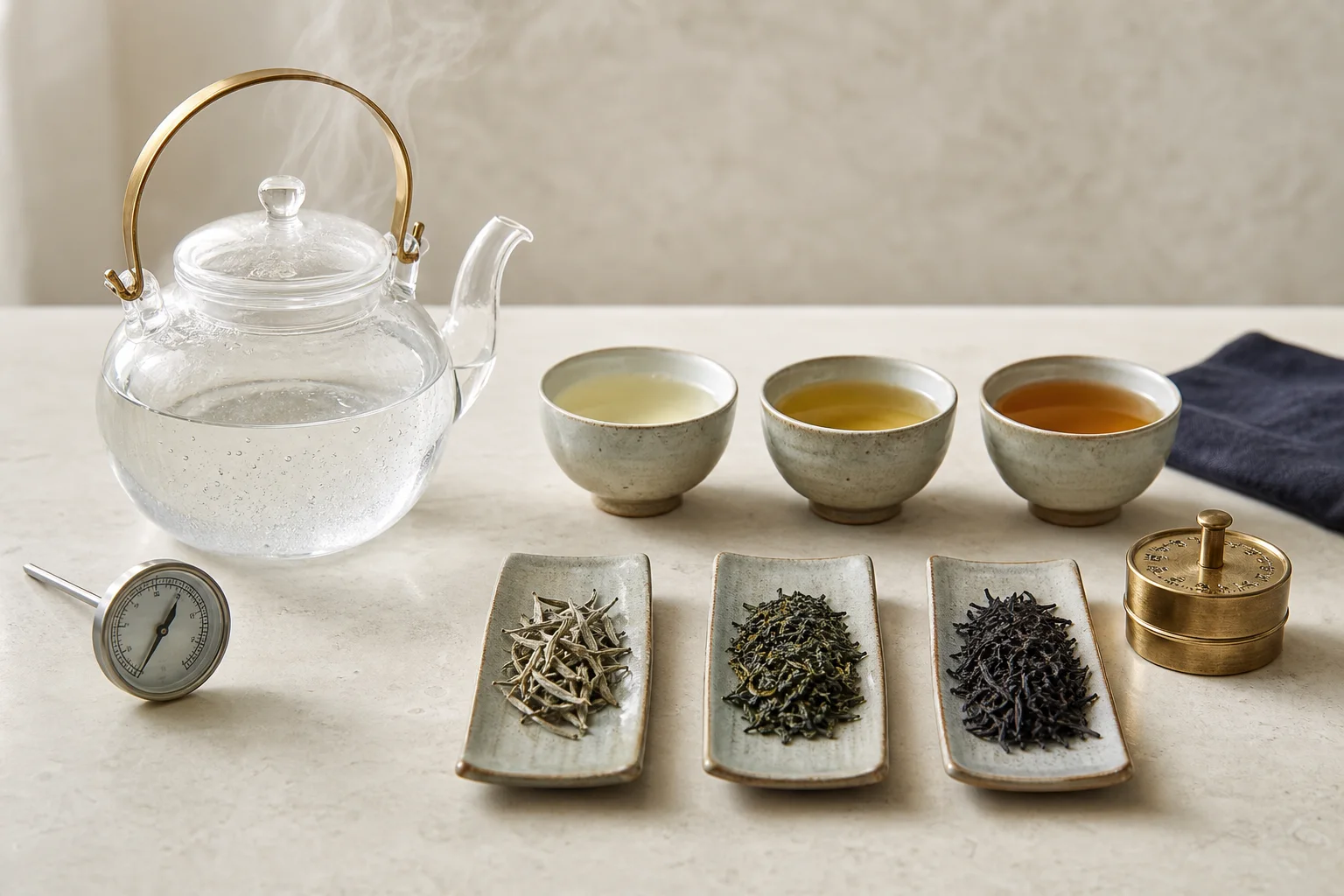
Tea Temperature and Infusion Time — A Practical Guide
No single temperature suits every tea. Use this practical guide to match the water and infusion time to the leaf and the character of the composition.
More -
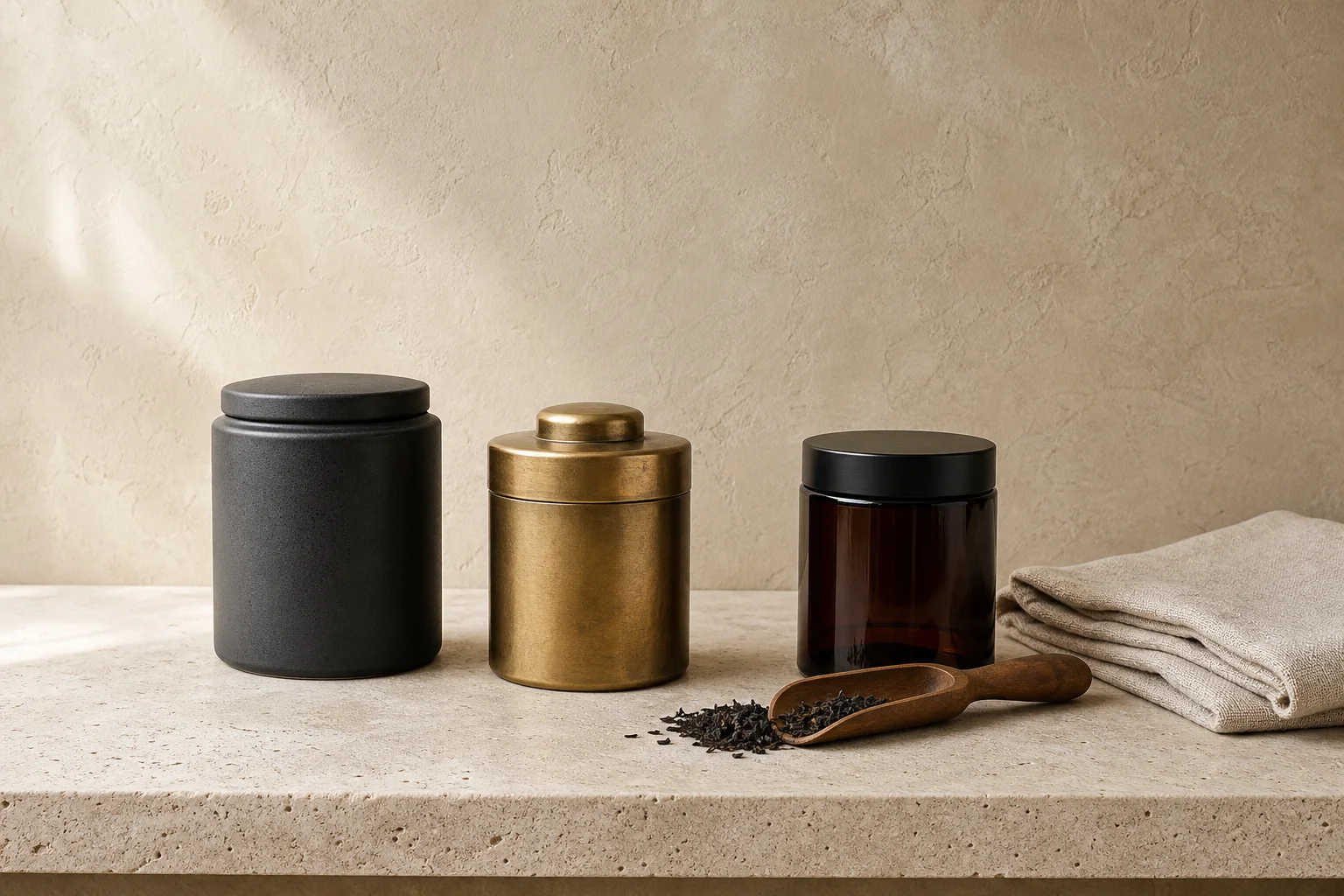
How to Store Loose-Leaf Tea and Preserve Its Aroma
Light, moisture and surrounding aromas can quickly diminish a tea's character. We explain which container to choose and where to keep your leaves.
More -
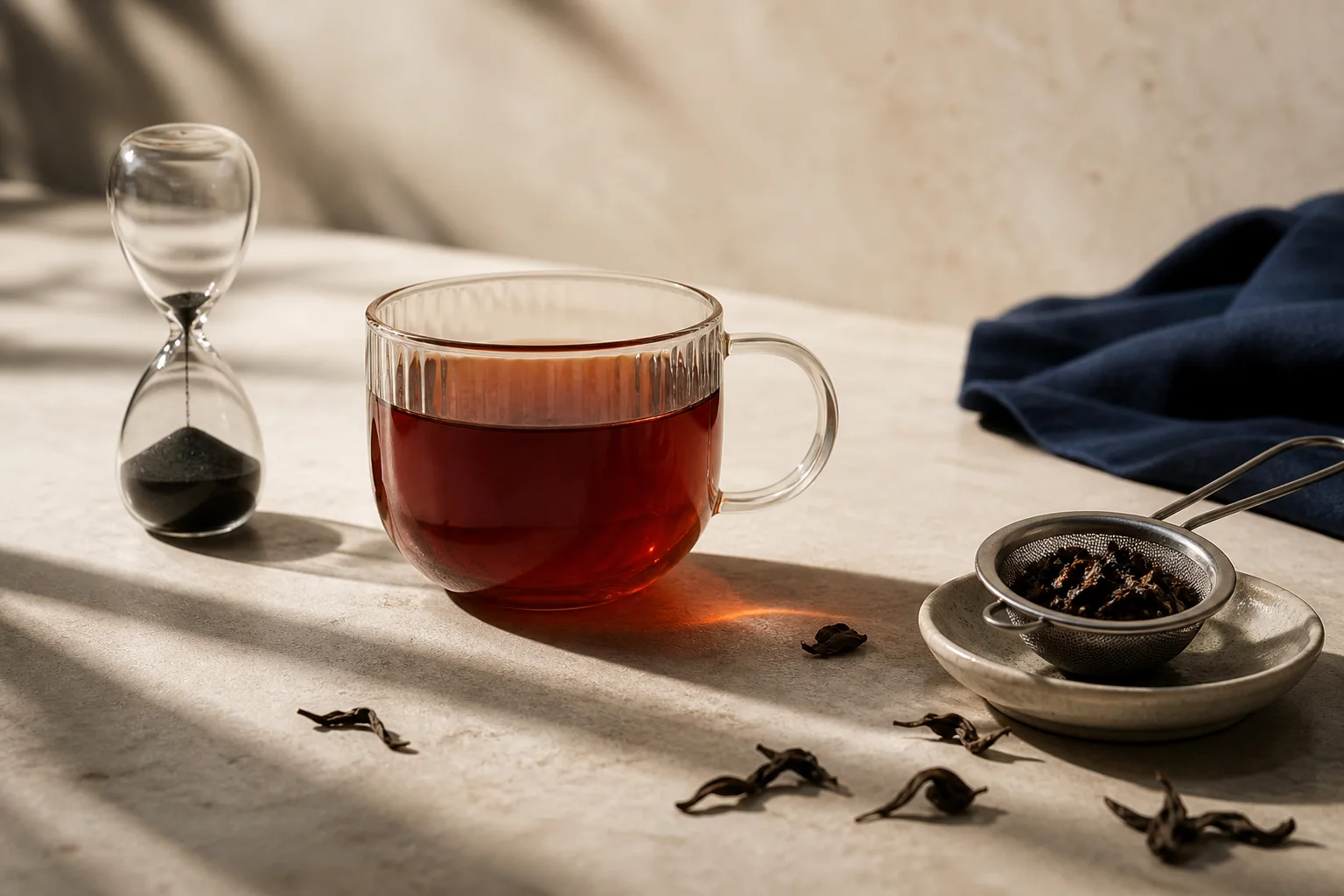
Why Is Tea Bitter? Seven Causes and Simple Solutions
A bitter infusion usually points not to poor tea, but to unsuitable parameters. See what to change for a cleaner, more harmonious cup.
More -
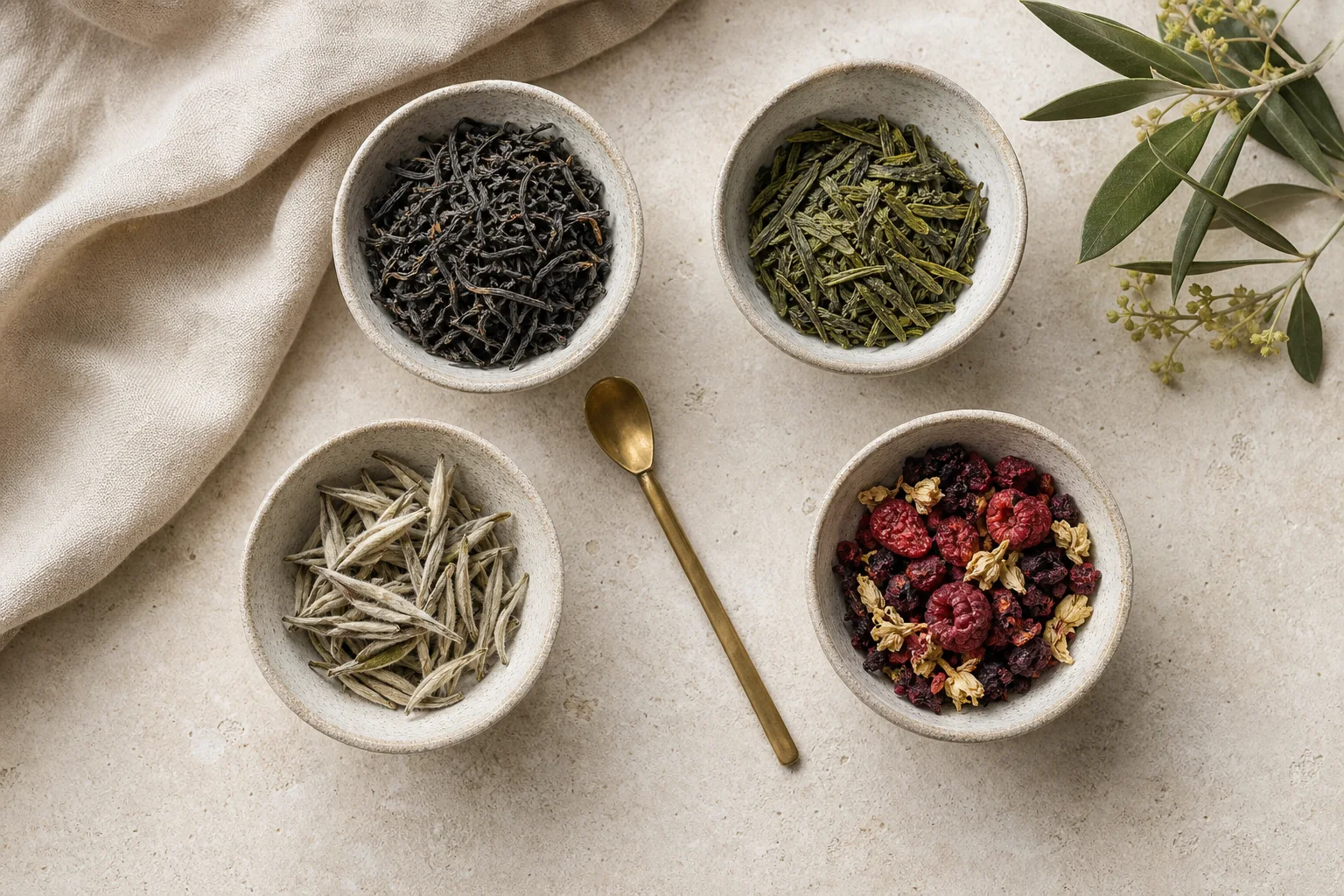
Types of Tea — Black, Green, White and Fruit Infusions
Discover the principal types of tea, their flavours, character and brewing methods. This guide will help you choose a composition for the moment and your own preferences.
More -
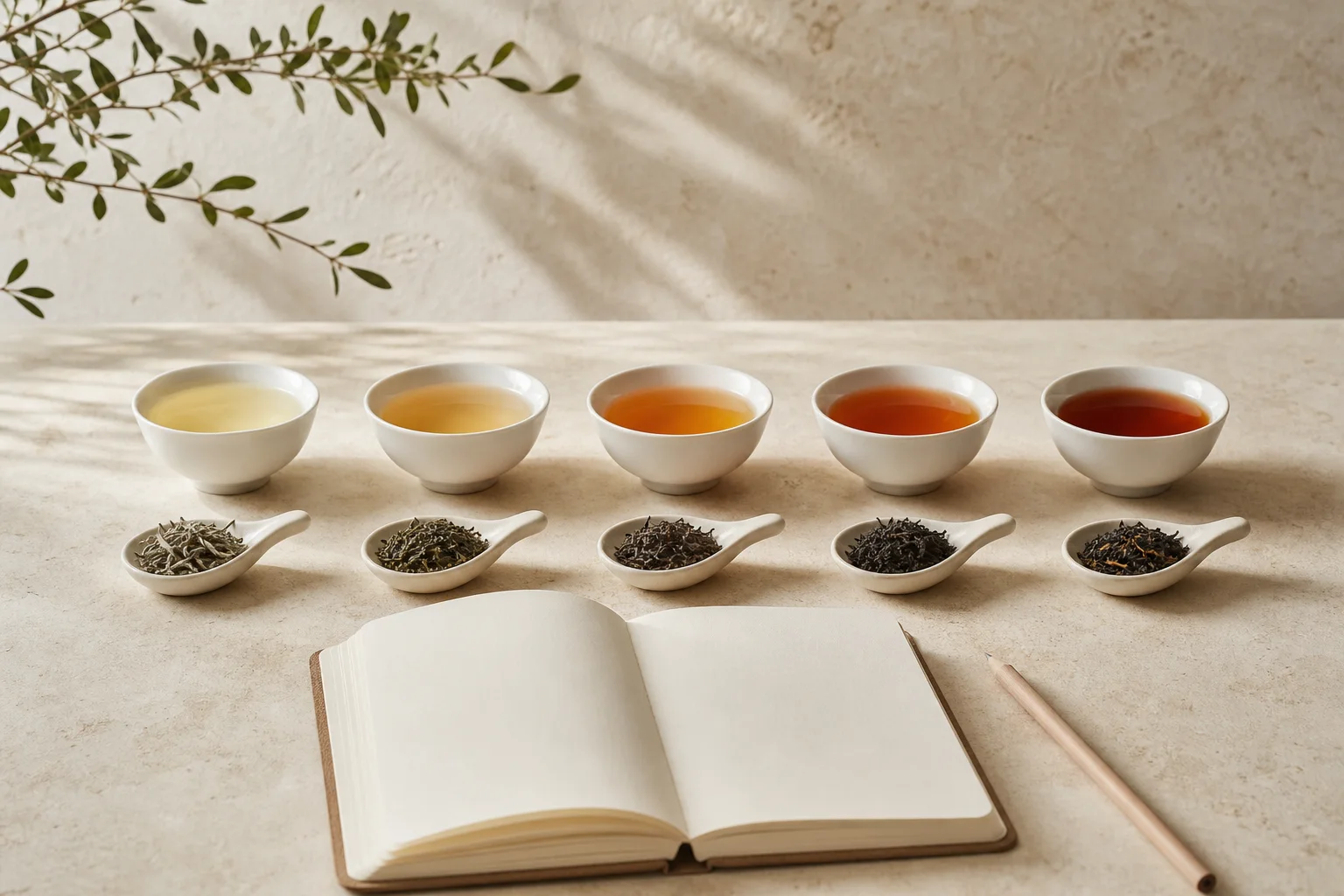
A Tea Tasting at Home — How to Compare Five Compositions
A tea tasting at home requires neither a professional setting nor an elaborate flavour vocabulary. A few well-chosen compositions, identical vessels and one principle are enough: change the tea, but keep the conditions as consistent as possible. It then becomes easier to discover whether you truly favour citrus freshness, floral delicacy or a deeper, spiced profile. In brief: choose 3–5 different teas and prepare them in separate vessels according to …
More -
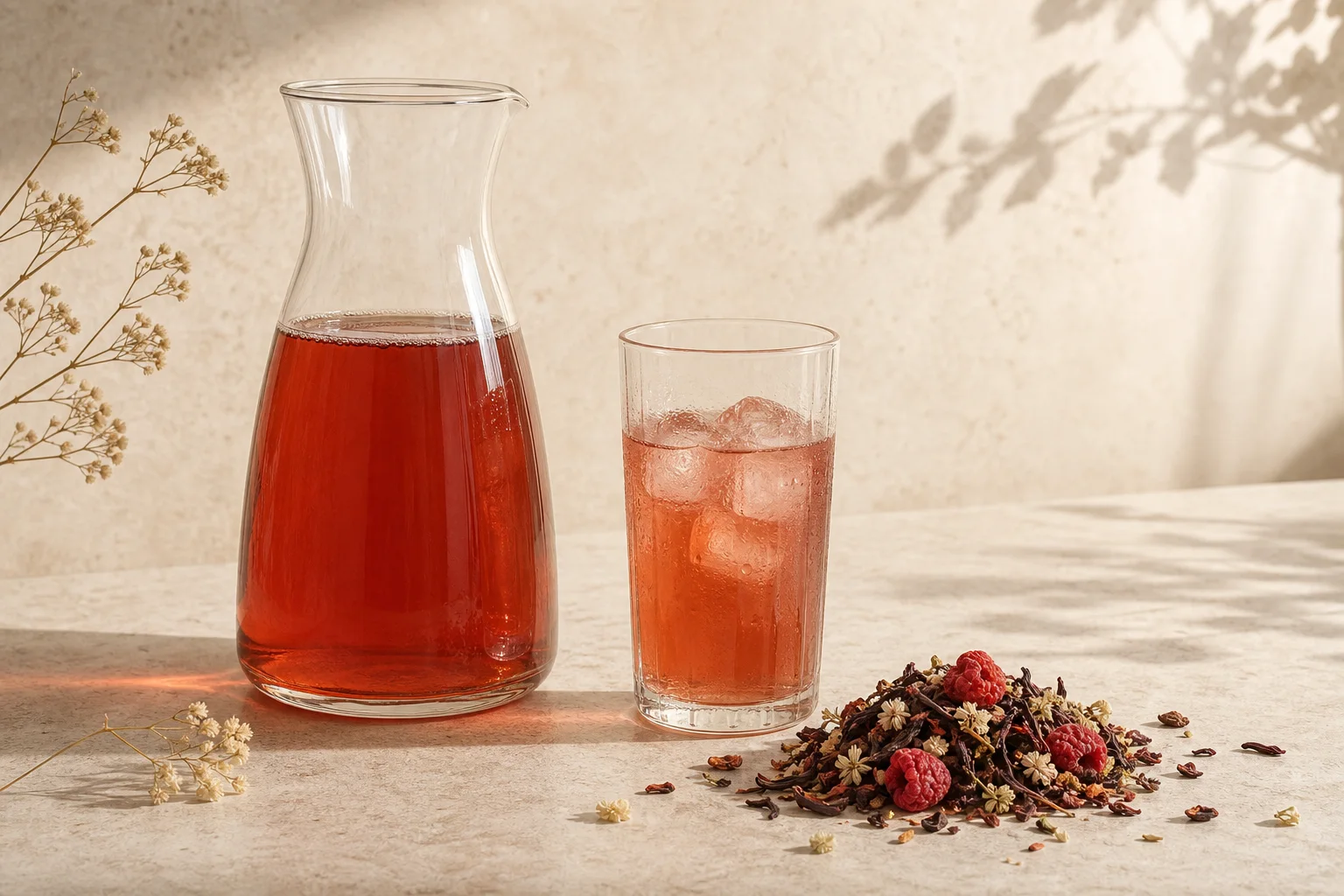
Cold-Brew Tea — How to Make Tea with Cold Water
Cold brew is tea prepared by allowing the leaves to macerate slowly in cold water. The method is simple and the result unexpectedly elegant: the infusion may be gentler, more succulent and less astringent than the same leaves brewed hot and then chilled. In brief: use 8–12 g of tea per litre of cold water, seal the vessel and place it in the refrigerator …
More -
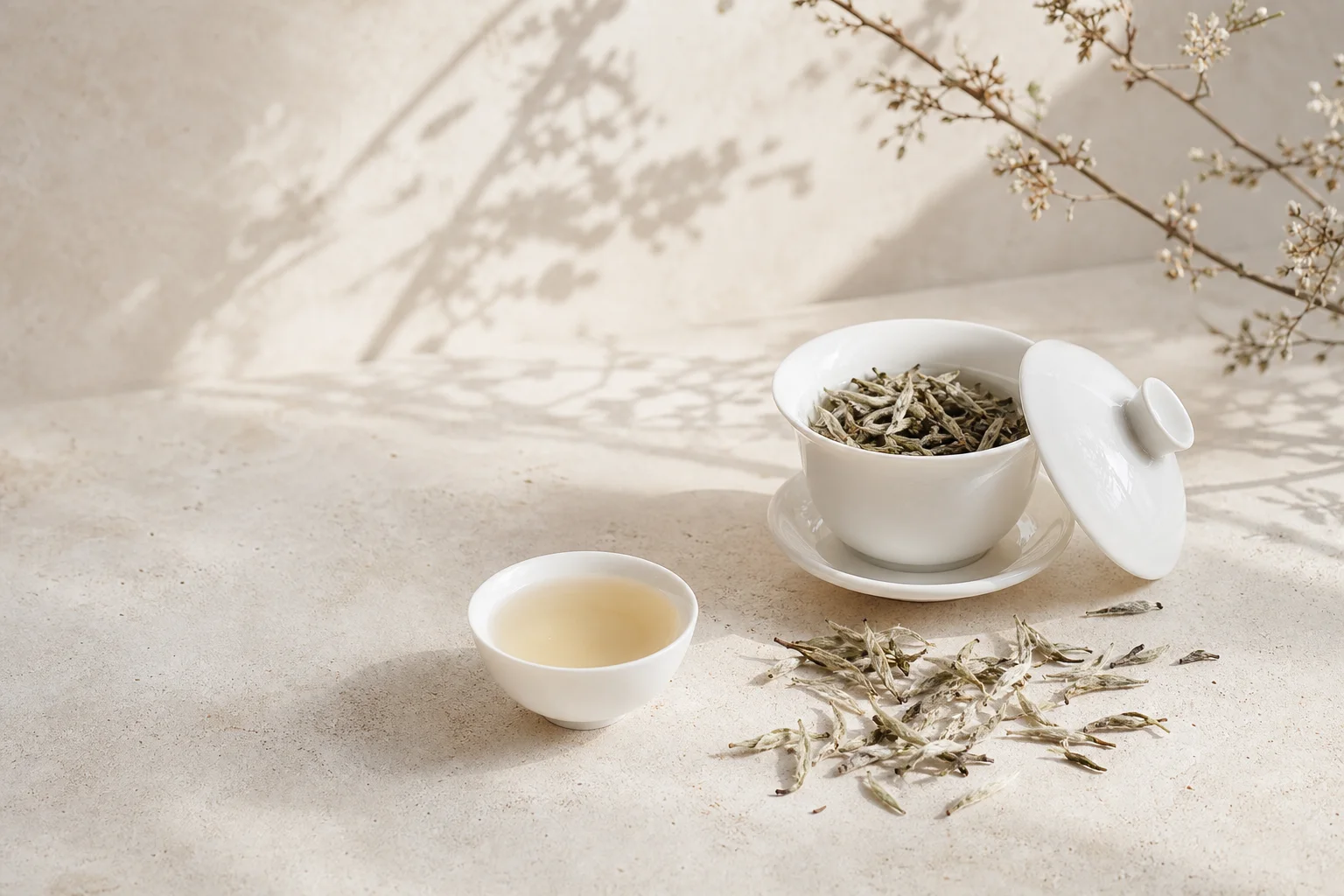
White Tea — What Is It, What Does It Taste Like and How Do You Brew It?
White tea captivates more quietly than most intense blends. Its aroma may be floral, honeyed, fresh or delicately fruity, while the texture is usually light and soft. That subtlety does not mean a lack of character — it simply calls for a more attentive tasting. In brief: white tea is made from young buds and leaves of the tea plant and undergoes comparatively little processing. Most often …
More -
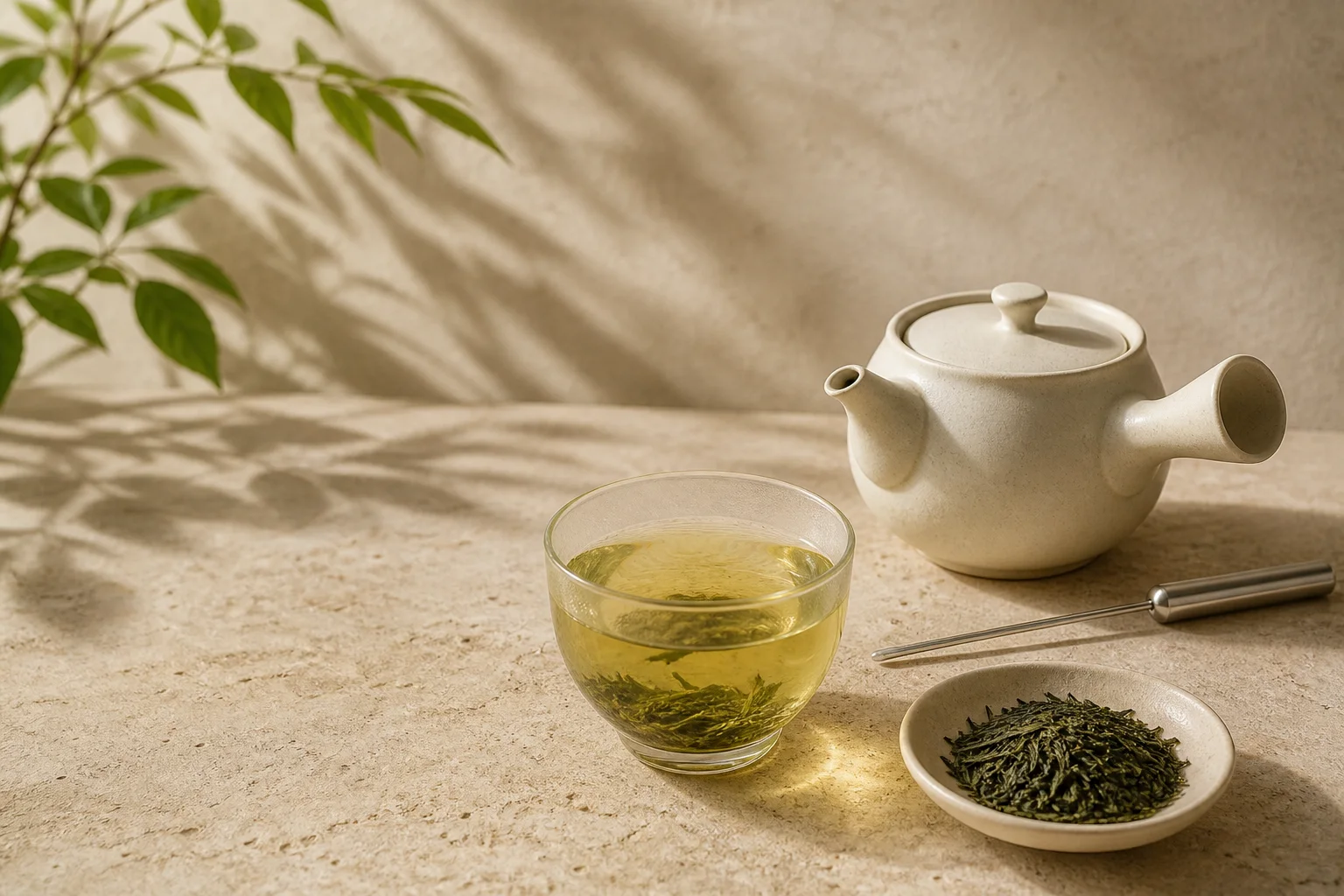
How to Brew Green Tea — Temperature, Time and Proportions
Green tea is too often associated with sharp bitterness. Prepared correctly, it can be fresh, vegetal, gently sweet, creamy or fruity. Three things make the greatest difference: water temperature, the quantity of leaves and their contact time with the liquor. In brief: use 2–3 g of green tea per 200 ml of water at approximately 80°C. Infuse for 2–3 minutes, then …
More
 English (UK)